Smart Flour News
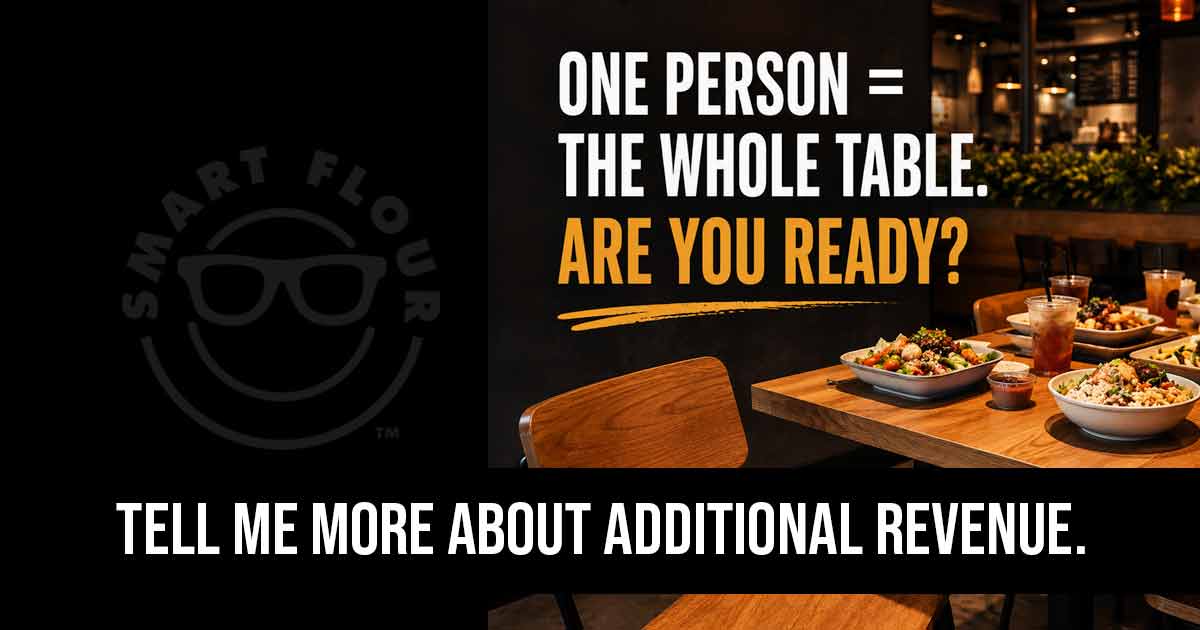
"Tell Me More About Additional Revenue"
The Menu Change That Pays for Itself
Most operators are looking for the same thing: more covers, higher check averages, and guests who come back. What they're not always looking for is the answer hiding in plain sight: in the dietary preferences of the guests already walking through the door.
Gluten-free menu additions aren't just an accommodation. When done right, they're a revenue multiplier.
The Math Behind the Table
Here's a dynamic that plays out in restaurants every day: a group of six is choosing where to eat. One person in the group has a dietary restriction. That person (often without saying a word) narrows the options down to restaurants where they know they can eat safely and well. Wherever that group lands, all six people spend money.
The gluten-free diner is, functionally, the group's decision-maker. And up to 25-30% of diners actively seek gluten-free options. That's not a fringe segment: that's a meaningful slice of every crowd.
Loyalty That Shows Up Again and Again
Gluten-free diners aren't casual about where they eat. They research. They ask questions. They find places they trust and return to them consistently – often with new guests in tow. This isn't impulse dining; it's intentional loyalty. When a restaurant earns it, the returns compound.
The flip side is equally true: a poor gluten-free experience, (mediocre food, uncertain cross-contamination protocols, staff who don't know the menu) you don’t just lose one guest. It loses the group, the return visit, and the word-of-mouth that would have followed.
Beyond the Entrée
There's a secondary revenue effect that's easy to overlook: when a restaurant commits to quality gluten-free options, it elevates the overall brand perception. It signals that this kitchen cares about execution across the board, and that signal is worth something.
What "Revenue Strategy" Actually Looks Like
The operators generating the most return from gluten-free aren't doing anything fancy. They're:
- Featuring gluten-free items clearly on the menu (in-house and online)
- Training staff to answer confidently; no "umm"s, no deflections
- Sourcing certified products that taste like food, not a compromise
- Leaning into the trust they've built through marketing and word of mouth
This isn't about adding a line item and hoping for the best. It's about building a menu and a guest experience that says: *We thought about you before you walked in.*
The Revenue You're Not Seeing
The cost of a bad gluten-free experience is largely invisible. There's no "lost GF table" line on a P&L. But it shows up in group dining occasions that went elsewhere, in online reviews that mention the word "limited," and in loyal diners who never made it through the door.
One good gluten-free option, built on a certified, high-quality product with solid kitchen protocols, can change that math entirely.
Smart Flour Foods makes it easy to start. GFCO-certified buns, rolls, crusts, and more, designed for real foodservice kitchens.
Let’s talk about what your menu could look like.