Smart Flour News
Why Gluten-Free Sometimes Fails at Restaurants
The Most Common Reasons Gluten-Free Fails (and What to Do Instead)
There's a difference between offering gluten-free and executing gluten-free. Most restaurants intend to execute…but many fall short, often without knowing it. The result is a guest experience that ranges from mildly disappointing to genuinely unsafe.
Here's an honest look at where gluten-free fails, and what the fix looks like.
#1: The Product Isn't Good:
The most common form of gluten-free failure is purely culinary: the product on the plate isn't something a guest would actually want to eat. Dry, crumbly, texturally off, or simply flavorless; a GF bun or crust that tastes like a compromise tells the guest something about how you feel about serving them.
Experienced gluten-free diners have high product literacy. They know what good looks and tastes like, because they've found it elsewhere. If your GF option doesn't clear that bar, they'll skip it…and they may not come back.
The fix: Invest in a product that was designed around the eating experience first. Ask for samples.
Test it in your kitchen.
Eat it yourself (yes, even if you are not required to eat gluten-free).
#2: Staff Doesn’t Know the Menu:
A server who answers "I think we have something?" or "I'm not sure if that's gluten-free" has already failed the guest; not because they're careless, but because they weren't prepared. That answer signals to a GF diner that they may or may not be served a carefully prepared GF meal.
The fix: Train front-of-house staff specifically on your GF items, other allergens, and protocol for each. Make it part of onboarding. Refresh it when the menu changes. And give them language that's confident and honest – they’re the key to your guests’ satisfaction.
#3: Cross-Contamination Is an Afterthought:
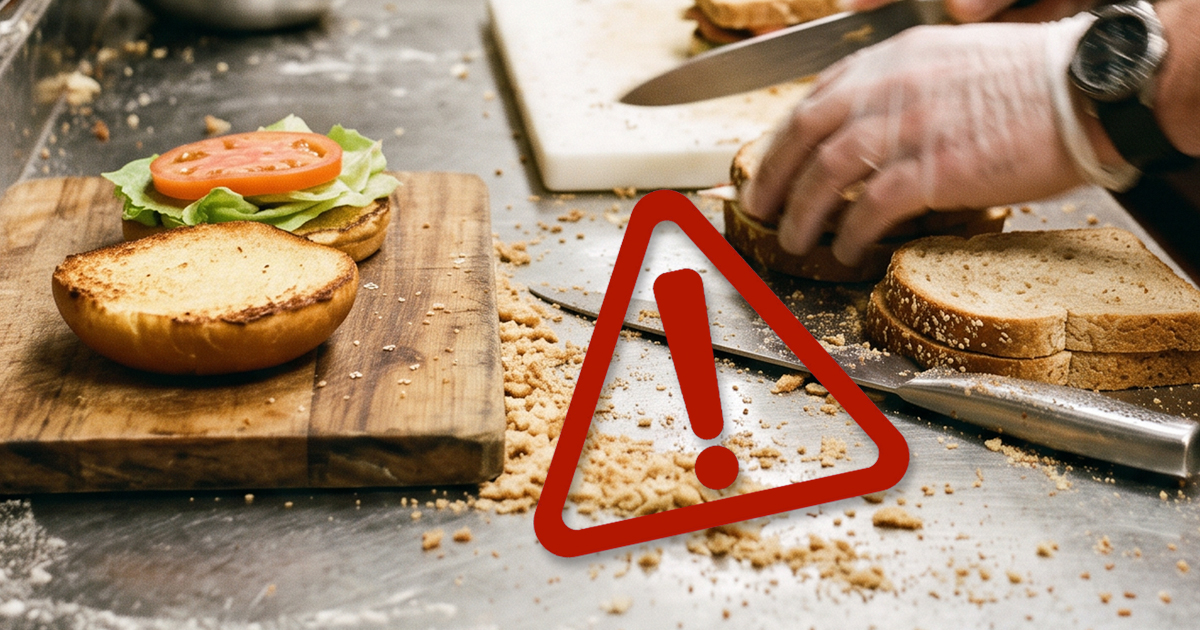
Starting off: unless you operate a 100% gluten-free restaurant, there is always at least small chance of cross-contamination. Along with the expectation of the guests, they are sometimes treading in deep water when first visiting a restaurant. Your staff should be precautionary, but you have to protect yourself, as well – state it as such on your menu, some restaurants stock a GF bun but store it next to the bread basket. Or toast it in the same toaster used for wheat bread. Or prep it on the same surface where flour was just dusted. These aren't malicious decisions — they're gaps in the protocol.
For a celiac diner, they can cause real harm. For a non-celiac GF diner, they create distrust that shows up in reviews.
The fix: Map your prep process and identify where wheat contact is possible. Build simple protocols for each risk point. Document them. Train your team.
Failure #4: The Option Is Invisible
A GF item buried in a menu footnote, unlabeled on a digital ordering platform, or mentioned only when a guest specifically asks isn't really being offered; it's just available. The guest who needed to know about it has probably already mentally written off your restaurant.
The fix: Mark GF items clearly. Put them in your online menu. Make them easy to find before the guest even steps in the door.
Failure #5: It's Treated as an Afterthought
When gluten-free is the last thing added to a menu, the last thing a server is trained on, and the last thing the kitchen cares about, guests feel it. The energy around "we have gluten-free" matters as much as the product itself.
The fix: Treat it as a feature, not a footnote. If you're going to do it, do it with intention — and let your marketing, your menu, and your team reflect that.
Smart Flour Foods is here to help operators go from "We have something" to "We do this well."
Let's talk.